Adaptive Plant Control

Automated process stability for higher plant performance

STADLERconnect's Adaptive Plant Control modules continuously monitor material flows and automatically adjust key process parameters in real time reducing manual intervention and keeping plant performance stable regardless of input variability. 

By continuously analyzing data from volume flow sensors and existing sorting equipment, STADLER's Adaptive Plant Control modules dynamically adjust key process parameters in real time. Rather than relying on manual adjustments and continuous operator supervision, the system automatically responds to changing plant conditions. This reduces operational complexity, capturing optimization opportunities consistently throughout the day, and ensuring the plant operates at its full potential. 

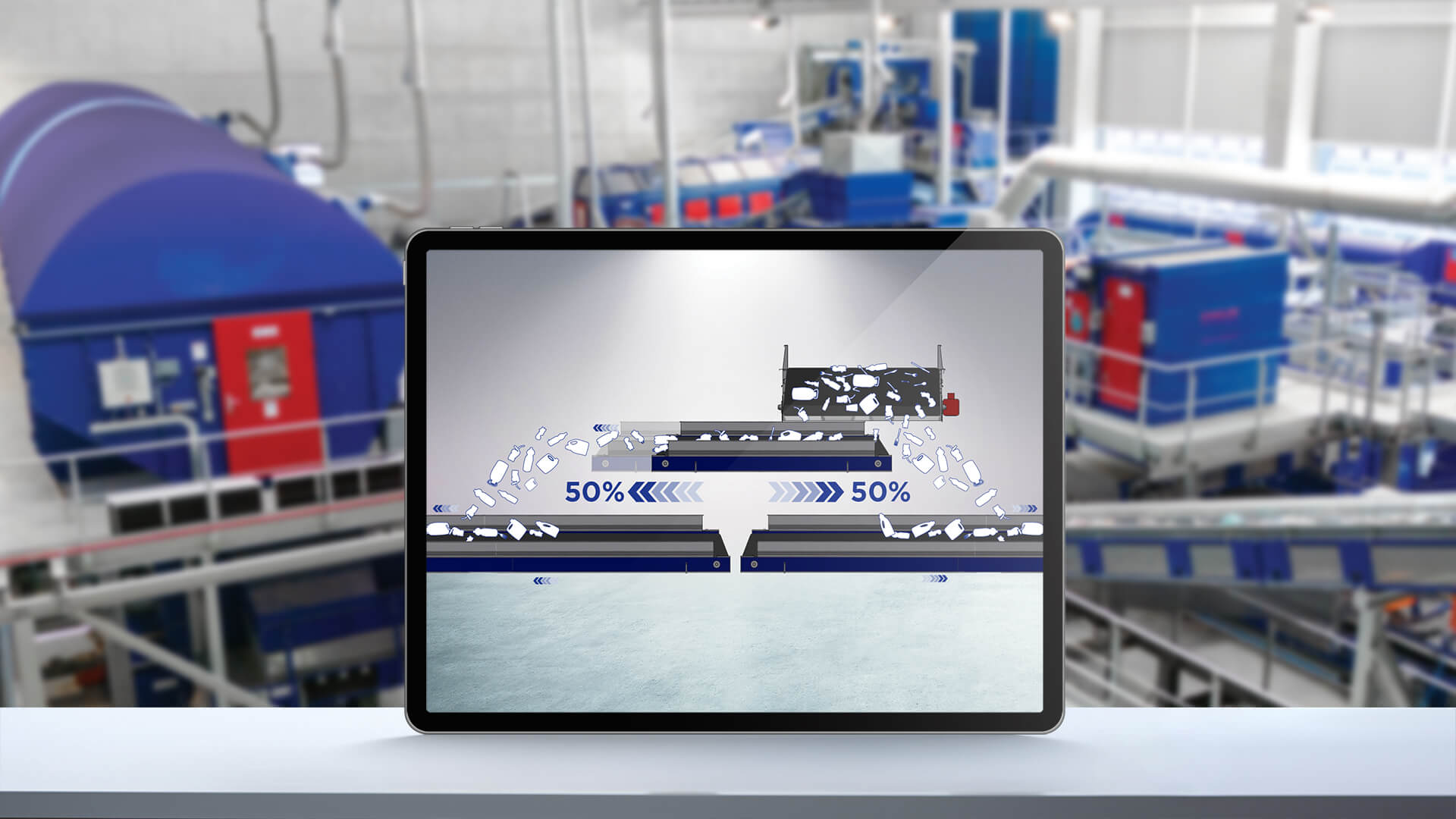
Tablet displaying the STADLERconnect Adaptive Plant Control system for automated material distribution in waste sorting plants. The display shows the even distribution of the material flow across two conveyor belts, each carrying 50 per cent. A STADLER sorting plant can be seen in the background.
Built on decades of plant engineering expertise

Automated process control for a more stable and productive plant

Adaptive Material Split Control provides automated control of movable units, streamlining material flow and reducing bottlenecks in your operation. Adaptive Screen Cut Control automatically adjusts screen cut settings based on near real-time monitoring, ensuring stable throughput and consistent grain-size distribution without manual intervention. Volume Flow Monitoring provides continuous, real-time insights into material throughput, delivering additional information on material volume that complements mass-based data and supports stable plant feeding. Our technology empowers you to enhance operational control, boost material recovery, and holistically optimize your sorting performance. 

Schematic illustration of material being distributed equally between two conveyor belts, with 50% on each and sensors monitoring the material flows.

Adaptive Material Split Control

Operational challenge:

Uneven distribution of material between two parallel lines due to fluctuating material characteristics manual adjustments significantly affecting plant performance 

Solution and benefits:  
  • Automated, material-dependent control ensures balanced loading and stable plant performance.  

  • Continuous automatic adjustment based on near-real time material flow  

  • Consistent design-based balance of line distribution 

  • Reduced risk of blockages and manual interventions 

Schematic illustration of a trommel screen with different aperture sizes and two material flows whose distribution is monitored by sensors.

Adaptive Screen Cut Control

Operational challenge:

Changing material characteristics lead to uneven distribution between size fractions when operating with fixed screen cut settings 

Solution and benefits: 

Automatic screen cut adjustment based on real-time line monitoring. 

  • Stable and balanced throughput across both size fractions 

  • Consistent grain-size classes for reliable downstream sorting 

  • No manual readjustments required 

A sensor above a conveyor belt measures the volume flow of plastic waste. A colour-coded scale indicates the utilisation level.

Volume Flow Monitoring

Operational challenge:

Lack of reliable throughput information results in limited process transparency and uneven feeding 

Solution and benefits: 

Simple-to-install sensors provide continuous volume flow insights. 

  • Real-time throughput monitoring at key process points 

  • Enables stable and even feeding of the plant 

  • More relevant than weight-based data for most aggregates 

dummy